
Champagne, Cocktails, and Mignonette: A Pairing Guide for Your Wedding Oyster Bar
Champagne, Cocktails, and Mignonette: A Pairing Guide for Your Wedding Oyster Bar
I've shucked at a lot of weddings by now, and I can usually tell within the first ten minutes of cocktail hour whether a couple thought about what's going next to the raw bar. Most didn't — and honestly, that's fine, most people don't know they're supposed to. But it's the easiest upgrade I know of, and it costs almost nothing extra.
Why the Drinks Matter as Much as the Oysters
The role of acidity in cutting through brine
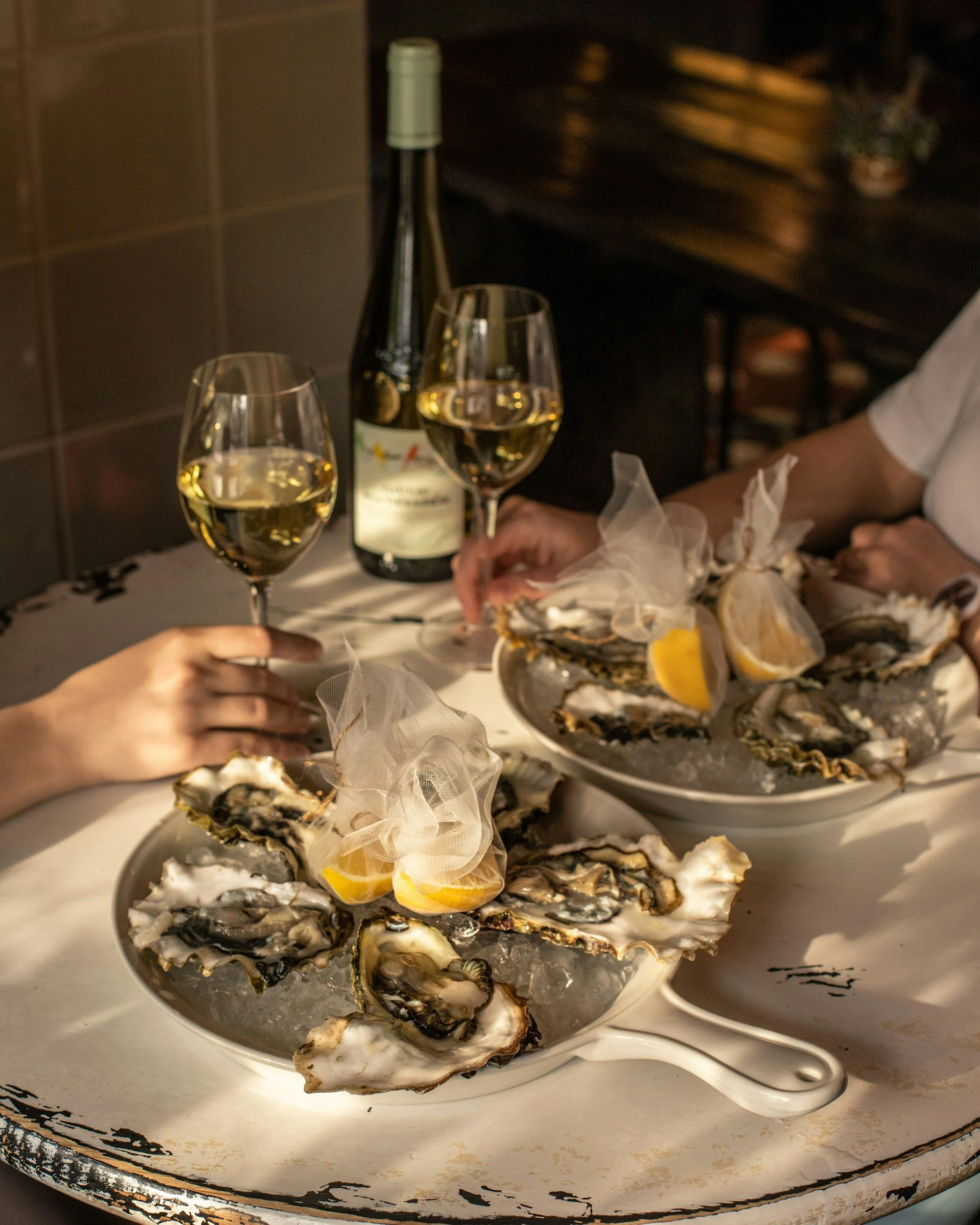
Oysters are salty, a little fatty, briny in that way that's great for the first two and then starts to sit heavy on your tongue by the fifth. That's where acid comes in — a mignonette, a dry sparkling wine, a citrus-forward cocktail — it resets your palate so oyster number six tastes as good as oyster number one. It's the same reason there's always a lemon wedge on a raw bar platter. We're just doing that same job at a bigger scale.
How pairing elevates a raw bar from a snack station to an experience
Here's the difference I see at every event: a tray of shucked oysters is catering. A tray of shucked oysters next to three mignonettes, a dry bubbles pour, and a cocktail built to go with it — that's a moment. Guests plan their cocktail hour around it. Same oysters, completely different experience, just because someone thought about what goes next to them.
What most couples overlook when planning drinks for a raw bar
The number one mistake I see: couples pick their toast champagne and just assume it doubles as the raw bar pairing. It almost never does. Toast champagne gets chosen for price and crowd-pleasing sweetness, and sweeter bubbles actually fight with brine instead of cutting it. These need to be two separate conversations, even if the same bottle ends up working for both.
The Classic Mignonette, and Where to Take It From There
What a traditional mignonette is made of
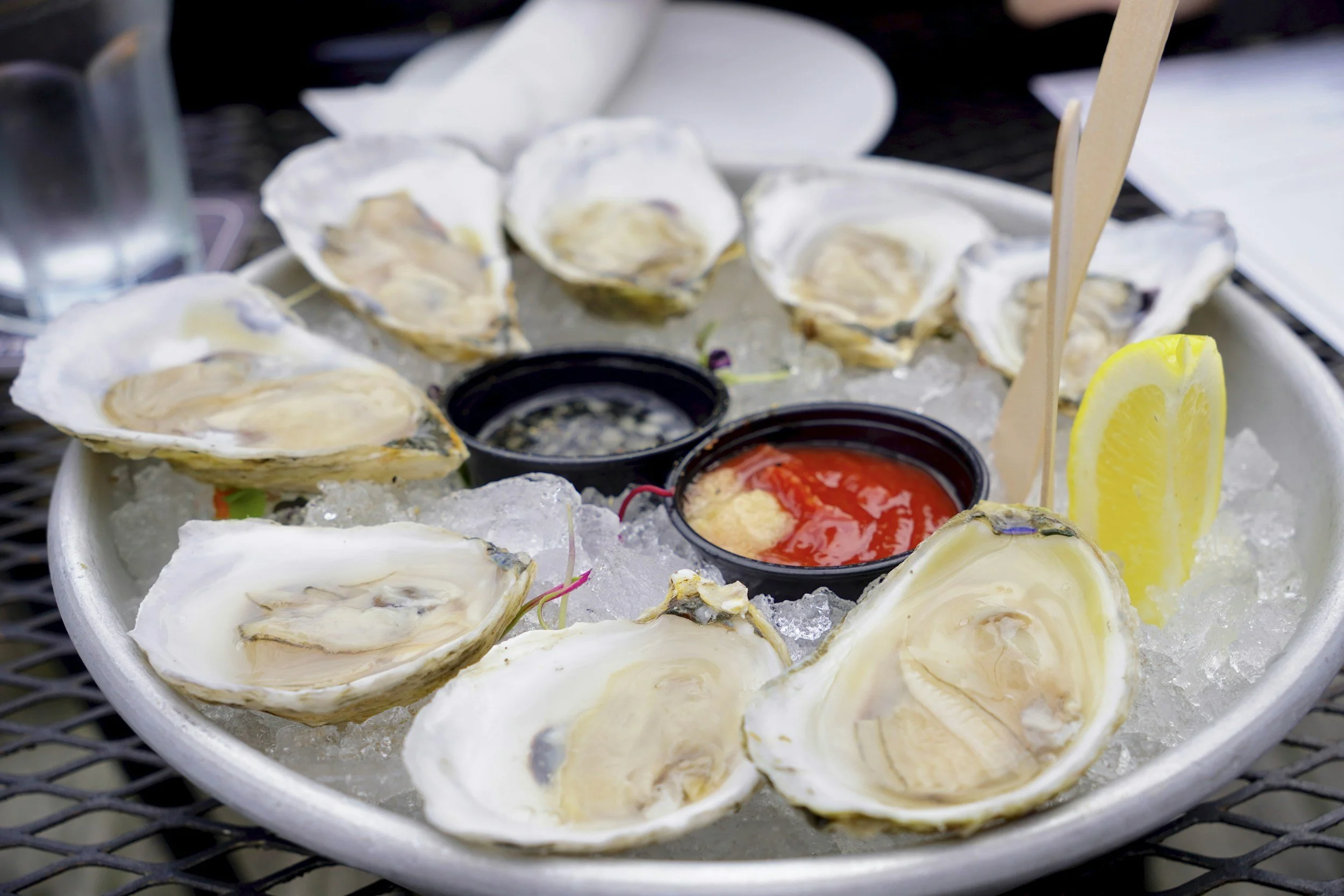
Classic mignonette is three things: red wine vinegar, minced shallot, cracked black pepper. That's the whole recipe. No oil, no sugar, nothing fancy — just enough sharpness to wake the oyster up without covering what it actually tastes like.
Variations worth trying
I like giving guests options here. A few I actually use:
- Champagne vinegar and shallot — softer than red wine vinegar, and it echoes whatever's in the glass if you're pouring bubbles.
- Blood orange and cracked pepper — brings sweetness and a gorgeous color, especially good for winter and early spring weddings.
- Cucumber and rice vinegar — the lightest of the three. Pairs beautifully with West Coast oysters that already lean sweet.
How to offer more than one mignonette without overcomplicating service
Three small pour bottles, clearly labeled, next to the shucking station. That's it. Any more and people start reading labels instead of tasting oysters. Keep the portions small too — mignonette is an accent, not something to drown the oyster in.
Champagne and Sparkling Wine That Actually Works With Oysters
What to look for (dry, high acid, minimal oak)
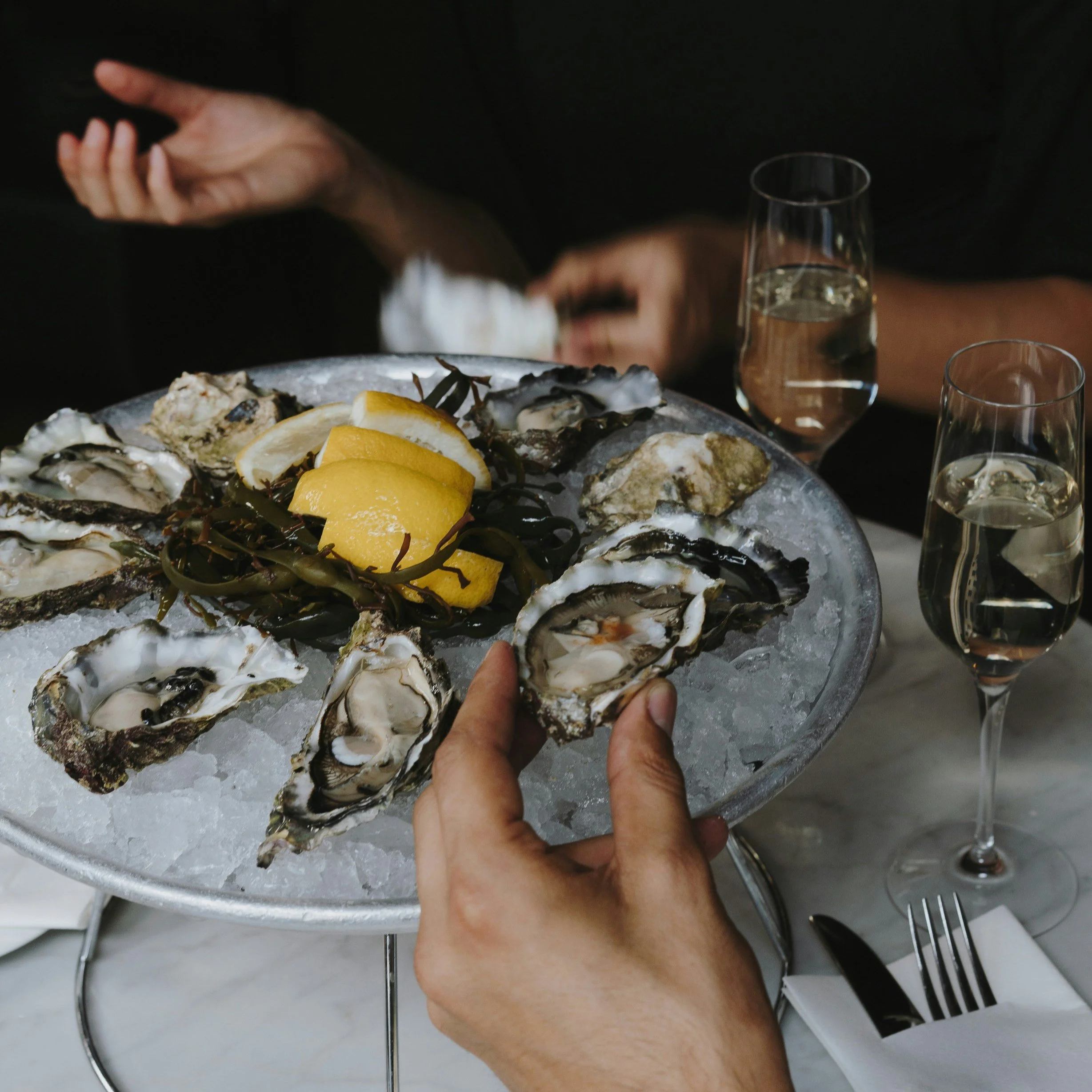
Bone dry. High acid. Little to no oak. Oak brings a buttery, rounder quality that flattens brine instead of cutting through it. Brut or Extra Brut, unoaked — that's the formula, not because it sounds fancier, but because it's actually built for the job.
A few reliable picks across price points
You don't need a splurge bottle to get this right. A solid Cava or a traditional-method Crémant does the exact same acid-cutting work as an expensive Champagne. Save the nice bottle for the toast — let the raw bar pairing be about structure, not the price tag.
Why not all "wedding champagne" is oyster-friendly
Prosecco and most of what gets marketed as "wedding champagne" lean sweeter and softer on acid — built to be an easy crowd-pleaser on its own, not to stand up against something briny. Nothing wrong with it. Just the wrong tool for this particular job.
Cocktail Pairings Beyond the Champagne Toast
Oyster shooters as a passed option
Small shooter — oyster, citrus, a little hot sauce or horseradish, sometimes a splash of vodka or tequila. I love passing these because it turns the raw bar into something guests across the room get pulled into, even if they never make it to the actual station. There's always somebody who treats it like a dare.
Gimlets and other citrus-forward cocktails
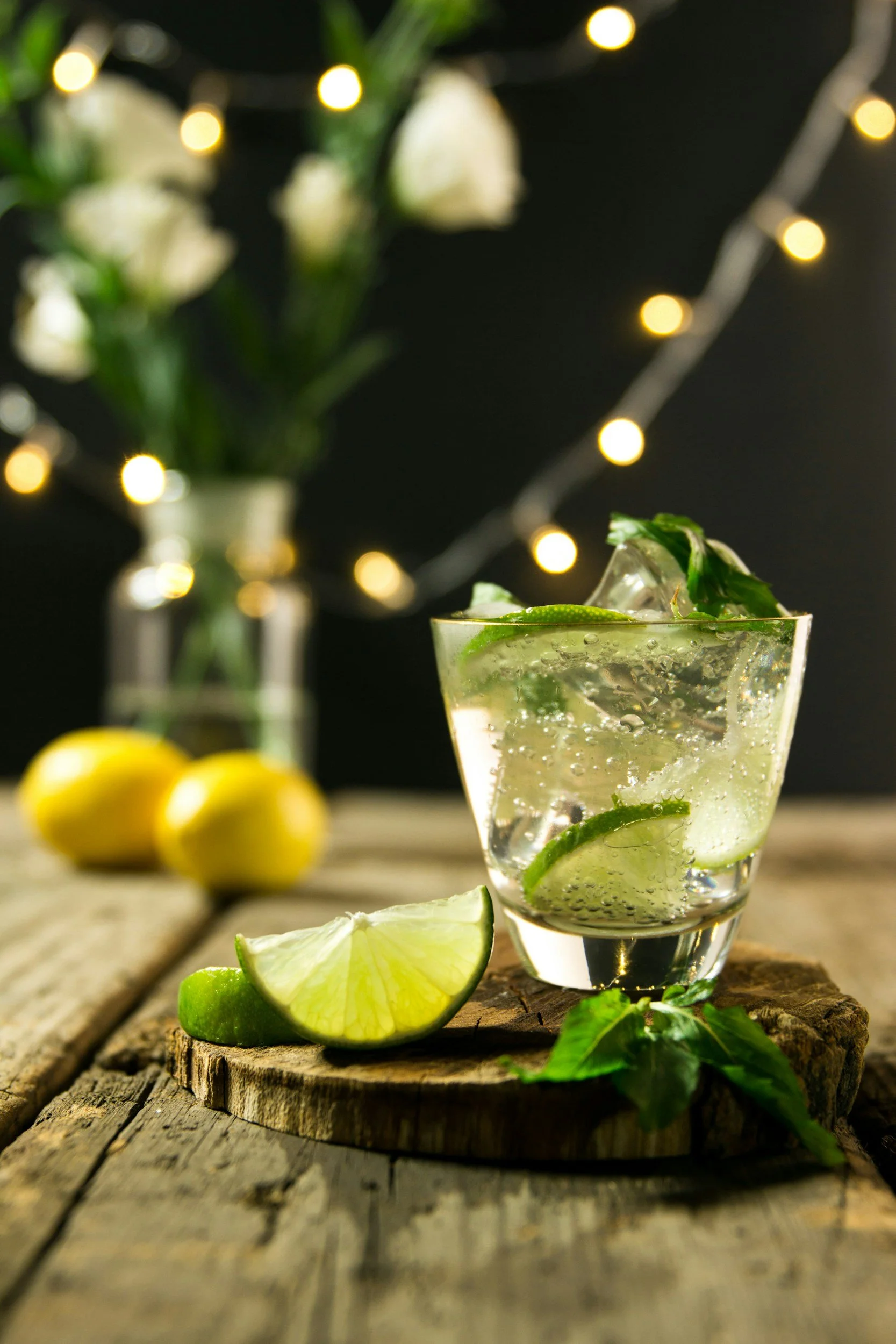
Anything lime or lemon-forward does the same job as a mignonette, just liquid. A good gimlet, a paloma, a vodka soda with real citrus — none of it fights the raw bar.
A michelada-style option for a Gulf Coast twist
For a New Orleans wedding, I'll push you toward this every time — beer, lime, hot sauce, a savory rim. It brings genuine regional character and pairs naturally with a Gulf oyster's bigger, brinier profile. Makes the whole pairing menu feel like it belongs here instead of anywhere else.
Matching cocktail strength to the pacing of cocktail hour
Cocktail hour's usually 45 minutes to an hour, and people are drinking before they've eaten a real meal. I keep the raw bar pairings lower-proof — spritzes, lighter cocktails — and save the stronger stuff for after dinner. Nobody remembers a great pairing if they're two whiskeys deep by the time they get to the table.
Building a Small Tasting Flight for Cocktail Hour
How many pairings is too many
Three's the number. Enough for a real tasting, not so much you've got guests standing there overwhelmed holding a plate. One sparkling option, one mignonette flight, one cocktail. That's a complete story.
Presentation ideas (flight cards, small pours, signage)
Small printed cards or simple signage at the station goes a long way — people like knowing what they're tasting. Keep pours small, 2 to 3 ounces, so the line keeps moving instead of people camping out.
Making it interactive without slowing down the line
Let guests choose instead of forcing every pairing on every plate. When I'm working the station, I'll just say "try the blood orange with this one, it's Gulf" — keeps things moving and still feels personal.
Staffing the Pairing Bar So Service Never Stalls
Why a trained shucker does more than shuck
A good shucker isn't just fast with a knife. They're reading the line, pacing the whole station, steering people toward pairings that actually make sense for what's in front of them. That's a skill, not a job title, and it shows the second things get busy. When you're comparing vendors, this is worth asking directly about — a New Orleans oyster shucker who's actually trained for events, not just trained to open a shell, is the difference between a station that flows and one that backs up during your busiest twenty minutes.
Coordinating drink service with shucking pace
The bar and the raw bar need to move at roughly the same speed. Somebody — usually your caterer — has to actually coordinate the two, or you end up with a slow bar line next to a fast raw bar and oysters sitting out longer than they should.
Fitting This Into Your Overall Wedding Catering Plan
Where pairings sit in the reception timeline
Cocktail hour's the natural home for this. Guests are mingling, not seated yet, actually have the attention span to taste through a flight. Try to run the same thing during seated dinner and the moment's already gone.
Coordinating with your caterer on quantities and budget
Pairings are a small line item — most of the cost is in the oysters themselves. When you're working out headcount with your New Orleans wedding catering team, loop the pairing plan into that same conversation early so quantities scale with your actual guest count instead of getting bolted on later.
Not Just for Weddings
How this pairing approach translates to other events
None of this is wedding-only. Corporate receptions, big birthdays, holiday parties — same logic applies everywhere: acid cuts brine, variety builds a moment, a well-paced station keeps things moving. If you're planning something outside the wedding world, the same pairing principles apply to any New Orleans catering event built around a raw bar.
Ready to Build Your Pairing Menu
The only real way to figure out what you like is to taste it side by side, not take my word for it in a blog post. If you're planning a wedding raw bar and want a pairing menu built around your actual guest list and season, let's set up a tasting.
